

Introduction
Rummy is a skill-based card game that rewards thoughtful decision-making, patience, and consistent practice. While learning the rules and understanding card combinations are important, many experienced players believe that the right mindset is just as valuable as technical knowledge. A calm and focused approach can help you make better decisions, avoid unnecessary mistakes, and enjoy the game more.
Many beginners think success depends only on receiving good cards. In reality, your ability to stay patient, observe the game carefully, and adapt to changing situations often has a greater influence on your overall performance. Building a strong mindset takes time, but every game provides an opportunity to learn and improve.
This guide explains practical ways to develop a positive and disciplined approach to rummy. Instead of looking for shortcuts, you’ll learn habits that encourage steady improvement and responsible gameplay.
Why Mindset Matters in Rummy
Mindset affects every decision you make during the game.
A positive mindset helps you:
- Stay calm under pressure.
- Think more clearly.
- Avoid emotional decisions.
- Learn from mistakes.
- Build confidence through practice.
- Maintain patience during difficult situations.
Players who focus on improving their decision-making often develop stronger long-term habits than those who rely only on luck.
Understand That Improvement Takes Time
One of the biggest mistakes beginners make is expecting immediate success.
Like any skill-based activity, rummy requires practice and experience. Every game teaches something new, whether it’s how to organize your cards more effectively, improve your observation skills, or make better decisions.
Instead of asking, “How quickly can I become an expert?” ask yourself:
- What did I learn today?
- Which decision worked well?
- What can I improve next time?
Viewing every game as a learning opportunity creates a healthier and more productive mindset.
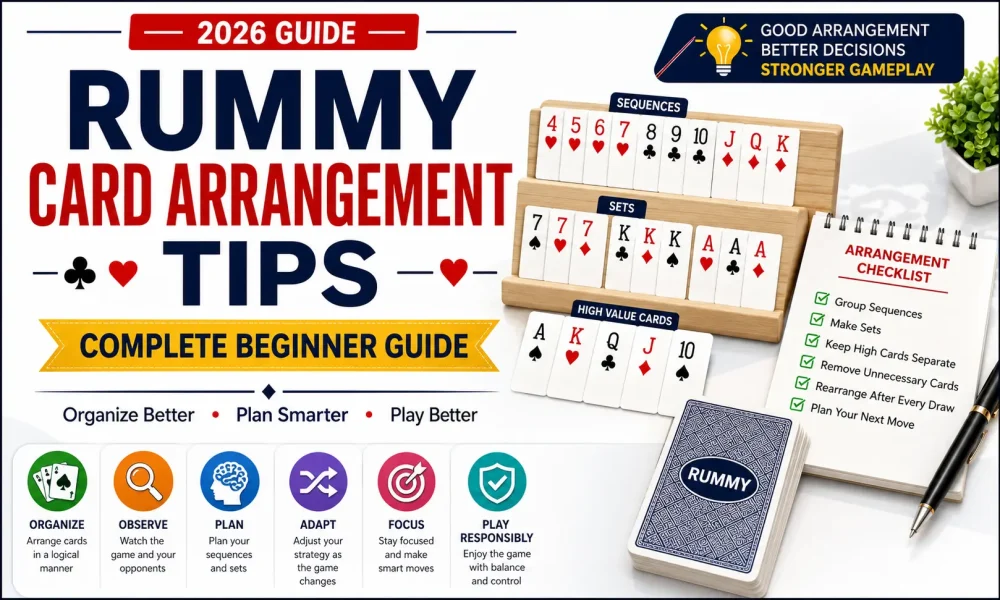
Rummy Card Arrangement Tips – Complete Beginner
Build Patience Before Every Move
Patience is one of the most valuable qualities in rummy.
Many beginners make quick decisions because they feel pressured to act immediately. Rushing often leads to avoidable mistakes.
Before making a move:
- Review your current hand.
- Consider different possibilities.
- Think about your overall plan.
- Decide carefully instead of reacting quickly.
Taking a few extra seconds can improve the quality of your decisions.
Stay Calm During the Game
Every player experiences unexpected situations.
You may draw an unhelpful card or realize that your original plan needs to change.
Instead of becoming frustrated:
- Stay calm.
- Focus on your next decision.
- Adapt your strategy if necessary.
- Avoid dwelling on previous mistakes.
Remaining calm helps you think more clearly throughout the game.
Improve Your Focus
Concentration plays an important role in skill-based games.
Simple ways to improve focus include:
- Playing in a quiet environment.
- Reducing unnecessary distractions.
- Avoiding multitasking.
- Taking regular breaks during longer sessions.
- Staying well-rested.
Better concentration helps you notice opportunities and reduce careless errors.
Think Before Every Decision
Every turn offers a choice.
Before drawing or discarding a card, ask yourself:
- Does this move improve my hand?
- Is there another option?
- Am I following my plan?
- Am I making this decision because I’m impatient?
Developing this habit encourages thoughtful gameplay.
Learn From Every Mistake
Mistakes are a natural part of learning.
Instead of becoming discouraged, review your games and identify:
- Decisions that worked well.
- Situations that caused confusion.
- Habits you would like to improve.
- Strategies that deserve more practice.
Keeping a simple notebook or digital journal can help you track your progress over time.
Build Confidence Through Practice
Confidence comes from preparation rather than shortcuts.
Regular practice helps you:
- Understand the rules more clearly.
- Improve card organization.
- Strengthen observation skills.
- Make decisions more comfortably.
- Feel more prepared for different situations.
The more experience you gain, the more natural these skills become.
Avoid Comparing Yourself With Others
Every player learns at a different pace.
Comparing yourself to experienced players can sometimes reduce motivation.
Instead:
- Focus on your own progress.
- Celebrate small improvements.
- Continue practicing consistently.
- Remember that everyone starts as a beginner.
Steady improvement is more valuable than trying to progress too quickly.
Develop a Learning Routine
A simple weekly routine can support continuous improvement.
Example:
Monday: Review the rules.
Tuesday: Practice card arrangement.
Wednesday: Improve observation skills.
Thursday: Read an educational guide.
Friday: Review previous games.
Weekend: Practice and apply what you have learned.
A structured routine encourages gradual and consistent progress.
Develop Better Observation Skills
Observation is one of the most valuable abilities in rummy.
Many beginners pay attention only to their own cards. While organizing your hand is important, observing the overall flow of the game can also help you make more thoughtful decisions.
Try to notice:
- The cards being discarded.
- Changes in the pace of the game.
- Your own repeated mistakes.
- Opportunities to improve your current hand.
Observation does not predict future outcomes, but it can improve your awareness and help you make more informed choices.
Learn to Adapt
Every game is different.
Sometimes your original plan works well, while other times you may need to adjust your approach.
Instead of waiting for one specific card throughout the game, remain open to alternative combinations when they make better use of your hand.
Adaptability is a valuable long-term skill because it helps you respond to changing situations without becoming frustrated.
Avoid Emotional Decisions
Emotions can influence decision-making.
Common emotional reactions include:
- Becoming impatient.
- Feeling frustrated after an unexpected draw.
- Rushing the next move.
- Losing concentration.
A better approach is to pause briefly before every decision.
Ask yourself:
- Am I thinking clearly?
- Does this move support my plan?
- Is there a better option?
Calm decisions are usually more consistent than emotional reactions.
Build Confidence Gradually
Confidence is developed through experience.
Many beginners believe confidence means playing quickly or taking unnecessary risks.
Instead, real confidence comes from:
- Understanding the rules.
- Practicing consistently.
- Reviewing previous games.
- Learning from mistakes.
- Staying patient.
As your knowledge grows, your confidence naturally improves.
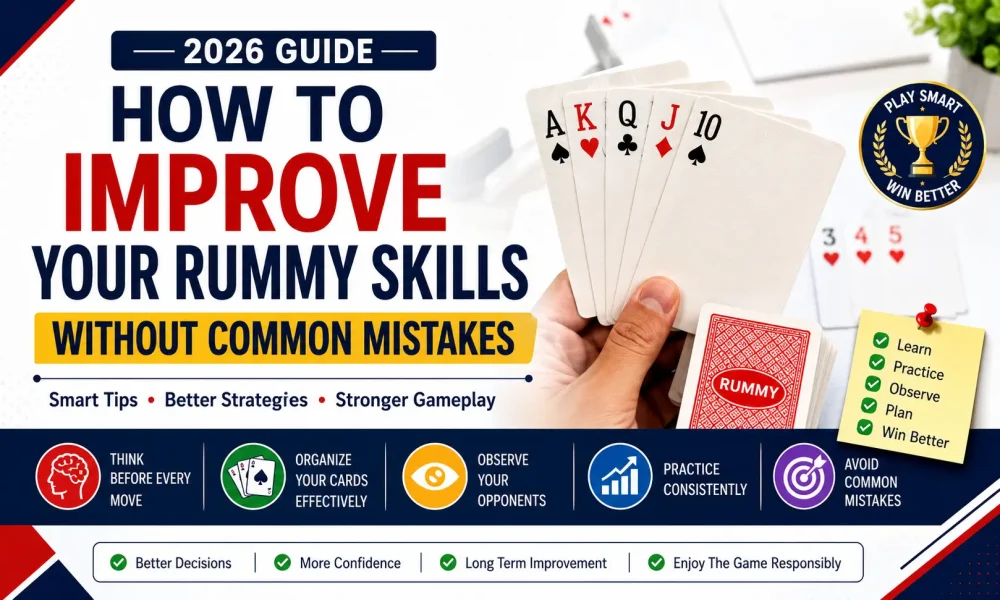
How to Improve Your Rummy Skills Without Common
Avoid Overconfidence
While confidence is valuable, overconfidence can create new problems.
After a few successful games, some beginners stop reviewing their mistakes or ignore basic strategies.
Continue asking yourself:
- What can I improve?
- Did I make any unnecessary decisions?
- Could I have organized my cards better?
Maintaining a learning mindset helps prevent overconfidence.
Create a Practice Routine
Improvement becomes easier when practice is consistent.
Example routine:
Monday
Practice card arrangement.
Tuesday
Review the rules.
Wednesday
Improve observation.
Thursday
Read educational content.
Friday
Review previous games.
Saturday
Practice decision-making.
Sunday
Review your weekly progress.
Small improvements made every week often become significant over time.
Improve Your Concentration
Concentration supports better decision-making.
Helpful habits include:
- Playing in a comfortable environment.
- Reducing distractions.
- Keeping your device updated.
- Taking short breaks.
- Staying well-rested.
Good concentration allows you to focus on the quality of your decisions instead of rushing.
Learn From Experienced Players
Watching experienced players can introduce new ideas.
Observe how they:
- Organize their cards.
- Remain calm.
- Adapt to changing situations.
- Think before every move.
Rather than copying every action, try to understand the reasoning behind their decisions.
Continue Learning
There is always something new to learn.
Helpful learning resources include:
- Beginner guides.
- Educational articles.
- Tutorials.
- Discussions with other players.
- Reviewing your own gameplay.
Continuous learning keeps your skills developing over time.
Build Healthy Gaming Habits
Responsible habits are an important part of maintaining a positive experience.
Examples include:
- Set reasonable time limits.
- Take regular breaks.
- Balance gaming with work, studies, and personal responsibilities.
- If a game offers optional paid features, decide your spending limit in advance and stick to it.
- Remember that gaming should remain a form of entertainment.
Daily Mindset Checklist
Before each session, remind yourself:
- Stay patient.
- Think before every move.
- Stay organized.
- Observe carefully.
- Learn from mistakes.
- Stay calm.
- Keep improving.
Following this simple checklist can help create consistent habits.
Build Long-Term Habits
A strong mindset is developed over time through regular practice and self-improvement.
Instead of looking for shortcuts, focus on habits that support steady progress.
Useful habits include:
- Reviewing your gameplay after every session.
- Learning one new concept each week.
- Reading beginner-friendly strategy guides.
- Practicing consistently.
- Remaining patient during difficult situations.
Small improvements made regularly can make a noticeable difference over time.
Accept That Mistakes Are Part of Learning
Every player makes mistakes.
Rather than becoming discouraged, treat mistakes as valuable learning opportunities.
After each game, ask yourself:
- Which decision worked well?
- What could I improve?
- Did I stay focused?
- Was my card arrangement clear?
- Did I remain patient throughout the game?
Reflecting on your decisions helps build experience and confidence.
Keep Improving Your Decision-Making
Good decision-making develops gradually.
Before every move, think about:
- Does this improve my current hand?
- Is there another option?
- Am I following my overall plan?
- Am I reacting emotionally?
Making thoughtful decisions consistently is more valuable than rushing through the game.

Common Mistakes New Rummy Players Make and
Stay Flexible
Not every game follows the same pattern.
Sometimes you’ll need to adjust your approach based on the cards available and the progress of the game.
Being flexible means:
- Remaining open to different combinations.
- Avoiding attachment to one specific plan.
- Adapting calmly when circumstances change.
Adaptability is a key part of long-term improvement.
Continue Building Confidence
Confidence grows with preparation and experience.
Ways to strengthen confidence include:
- Practicing regularly.
- Understanding the rules thoroughly.
- Organizing your cards effectively.
- Reviewing previous games.
- Celebrating gradual progress.
Confidence based on learning is more reliable than confidence based only on results.
Maintain Responsible Gaming Habits
Responsible gaming helps keep the experience enjoyable.
Healthy habits include:
- Set reasonable time limits.
- Take breaks during longer sessions.
- Balance gaming with work, studies, and family responsibilities.
- If a game includes optional paid features, decide your budget in advance and stick to it.
- Remember that no strategy guarantees success in every game.
Maintaining balance supports a positive long-term experience.
Frequently Asked Questions
What is a winning mindset in rummy?
A winning mindset focuses on patience, thoughtful decision-making, continuous learning, and staying calm rather than expecting immediate success.
Can beginners improve quickly?
Every player learns at a different pace. Regular practice and reviewing your gameplay can help you improve steadily over time.
Why is patience important?
Patience allows you to evaluate your options carefully and avoid rushed decisions that may lead to unnecessary mistakes.
How can I improve my focus?
You can improve focus by:
- Playing in a quiet environment.
- Reducing distractions.
- Taking regular breaks.
- Staying well-rested.
Does confidence help?
Yes.
Confidence built through preparation and practice can make decision-making more comfortable and consistent.
Should I review every game?
Reviewing completed games helps identify mistakes, reinforce good habits, and guide future practice.
Is observation an important skill?
Observation helps players understand the flow of the game and recognize patterns in their own decision-making.
How often should I practice?
Short, regular practice sessions are generally more effective than occasional long sessions.
Can mindset improve over time?
Absolutely.
Mindset develops through experience, patience, learning, and consistent practice.
What should beginners focus on first?
Beginners should first:
- Learn the rules.
- Organize their cards.
- Stay patient.
- Think before every move.
- Practice consistently.
These fundamentals create a strong foundation for future improvement.
Quick Mindset Checklist
Before every game, remember to:
- Stay calm.
- Think logically.
- Focus on learning.
- Observe carefully.
- Stay organized.
- Be patient.
- Practice regularly.
- Learn from mistakes.
- Enjoy the process.

Best Yono Games Tips
Conclusion
Developing a strong rummy mindset is a gradual process built on patience, focus, observation, and continuous learning. While understanding the rules and improving technical skills are important, your attitude toward learning often has an even greater influence on long-term progress.
Instead of chasing shortcuts or expecting immediate results, focus on building good habits. Review your games, stay organized, think before every move, and remain open to learning from both successes and mistakes.
Remember that no single strategy or mindset guarantees success in every game. The most successful players continue improving by practicing consistently, making thoughtful decisions, and maintaining a balanced approach to gaming.
By applying the ideas in this guide, beginners can gradually build confidence, improve their decision-making, and enjoy rummy as a skill-based game while maintaining responsible gaming habits.